Outcomes of Competition

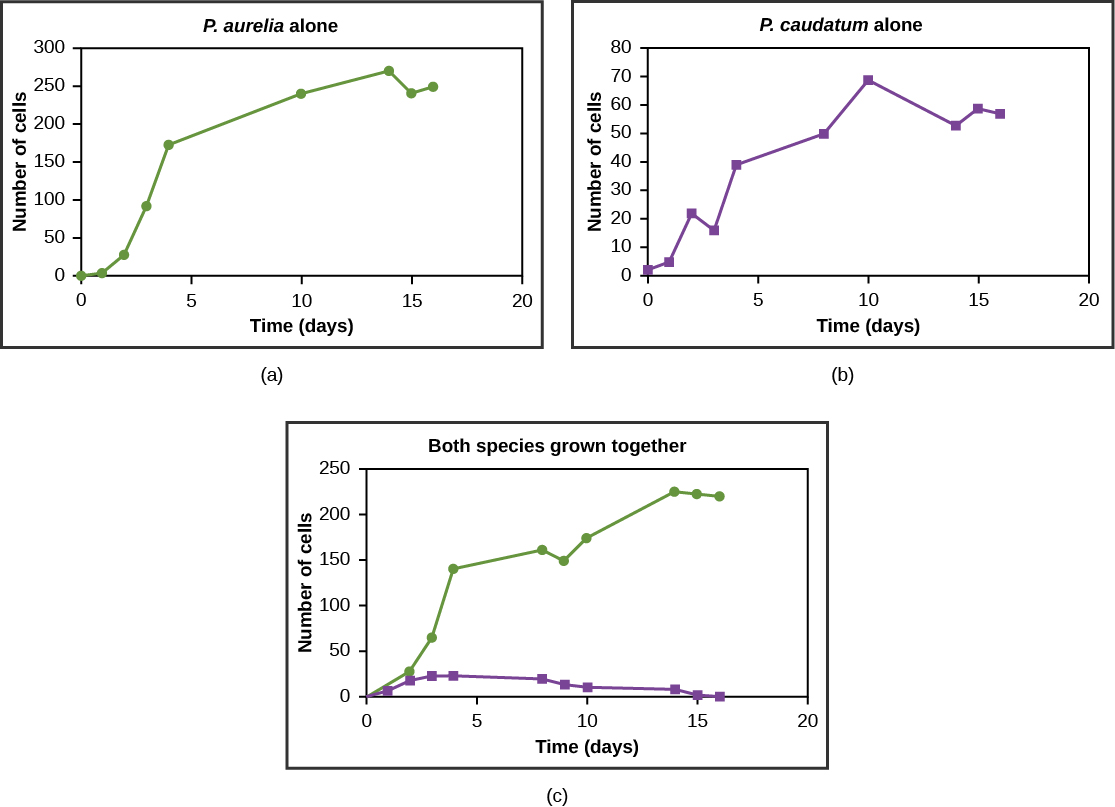
Graph showing Paramecium competition
Extinction

Competitive Exclusion

Also known as Gause's Law. This principle states that two species competing for the exact same limited resources cannot coexist at constant population values. When one species has even the slightest advantage, it will eventually dominate.

Classic Example: Paramecium aurelia outcompetes Paramecium caudatum when grown together, driving the latter to local extinction.
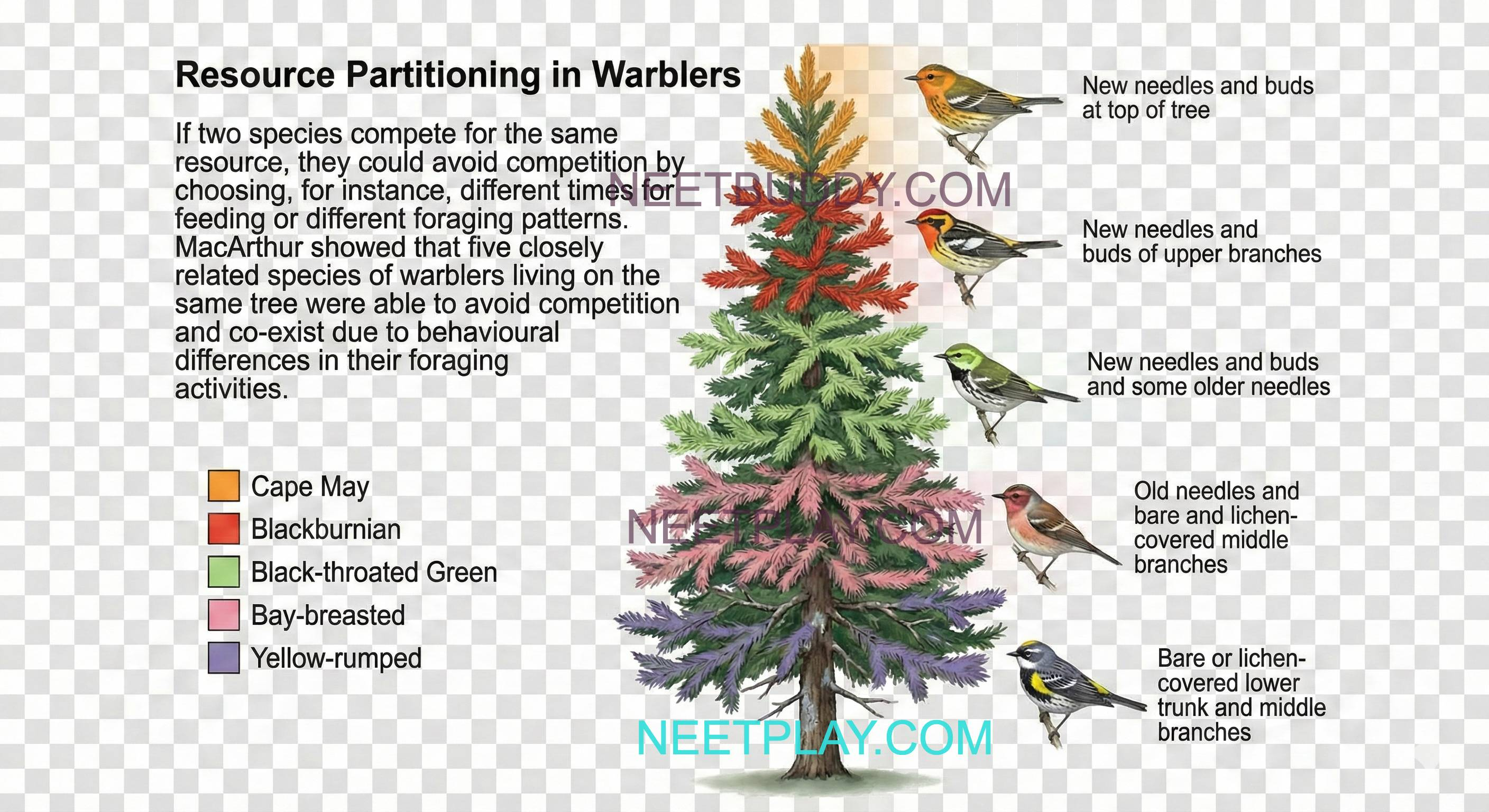
Diagram of Warblers partitioning tree resources
Coexistence

Resource Partitioning

To avoid exclusion, similar species evolve to use resources differently. They may divide resources by time (nocturnal vs. diurnal), space (zones), or diet to minimize direct competition.

Classic Example: MacArthur's Warblers. Five species of warblers live in the same spruce trees but feed in different zones (top, middle, bottom) to coexist.
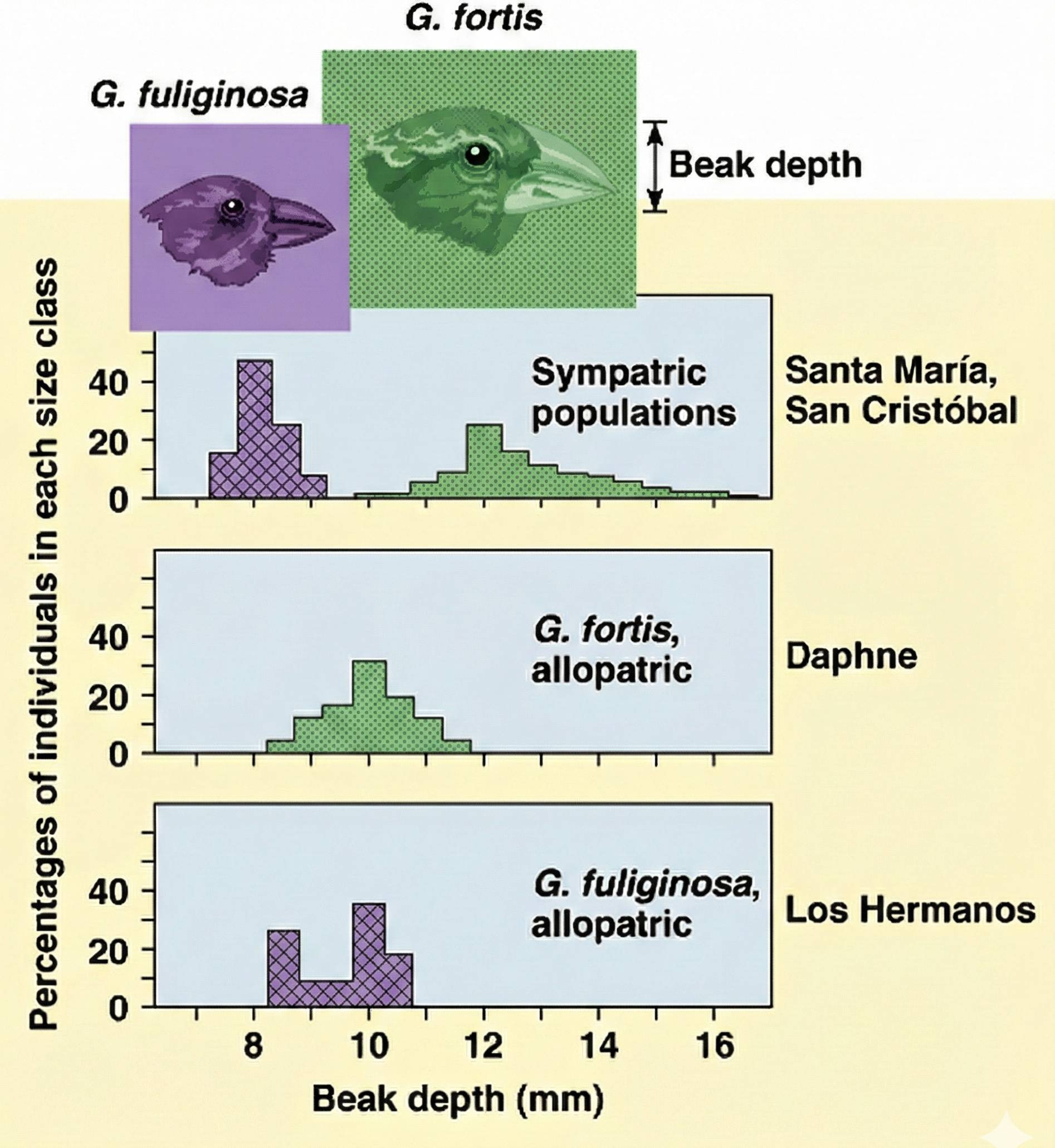
Darwin's Finches beak comparison
Evolution

Character Displacement

An evolutionary divergence that occurs when similar species inhabit the same environment (Sympatric). Their physical traits diverge to reduce competition, whereas they remain similar in separate environments (Allopatric).

Classic Example: Galápagos Finches. Beak depths are similar when species live on separate islands (allopatric) but diverge significantly when they share an island (sympatric).