
Understanding the Immune System
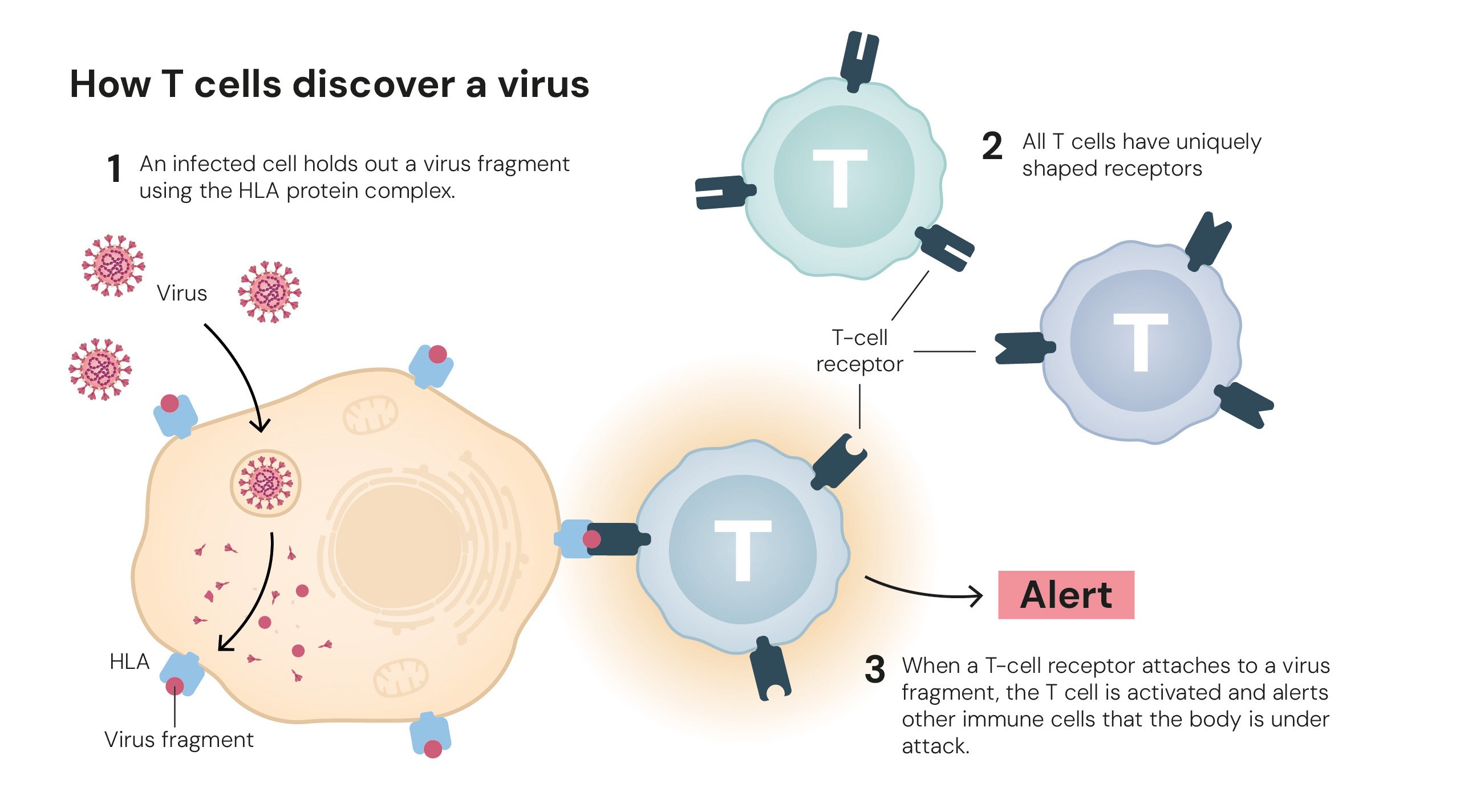
Our immune system is like a powerful army that protects our body from harmful invaders like viruses, bacteria, and other germs. Every day, thousands of different microbes try to enter our bodies, but our immune system fights them off to keep us healthy. Without this protection, we would not survive even a single day.
The Problem - When Immunity Goes Wrong
Sometimes, our immune system makes a terrible mistake. Instead of attacking only harmful invaders, it starts attacking our own healthy cells and tissues. This is like having security guards who start attacking the very people they're supposed to protect. When this happens, we develop autoimmune diseases like diabetes, multiple sclerosis, or rheumatoid arthritis.
Central vs Peripheral Tolerance
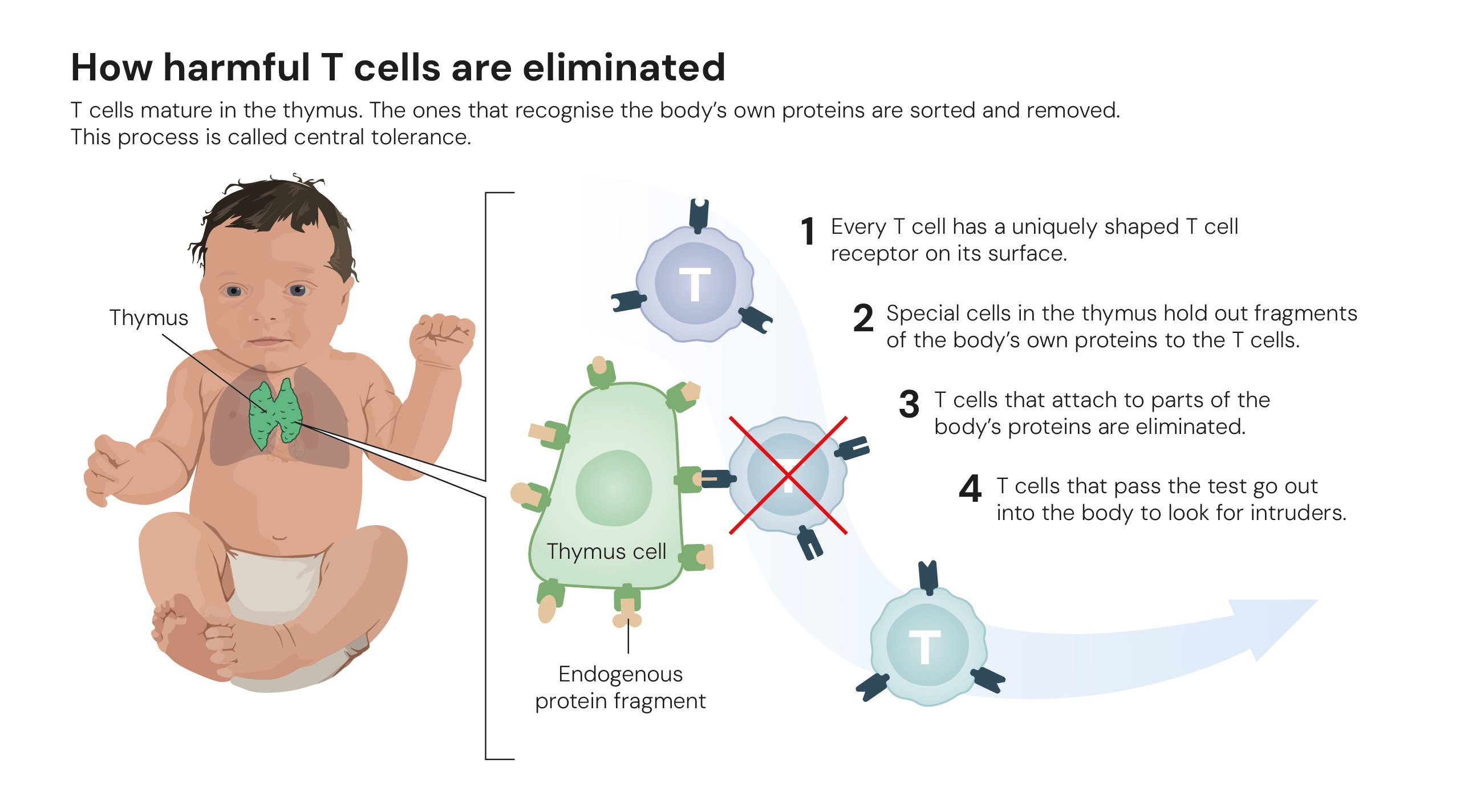
The thymus is like a training school for immune cells. Here, dangerous immune cells that might attack our own body are eliminated. This is called 'central tolerance.' However, some dangerous cells escape this training. That's where 'peripheral tolerance' comes in - it's like having backup security guards in the rest of the body to catch these escaped dangerous cells.
Regulatory T Cells - The Body's Peacekeepers

Regulatory T cells (Tregs) are special immune cells that act like peacekeepers. While regular immune cells are like soldiers ready to fight, Tregs are like wise generals who tell the soldiers when NOT to fight. They prevent our immune system from attacking our own healthy tissues, thus preventing autoimmune diseases.
Sakaguchi's Groundbreaking Discovery
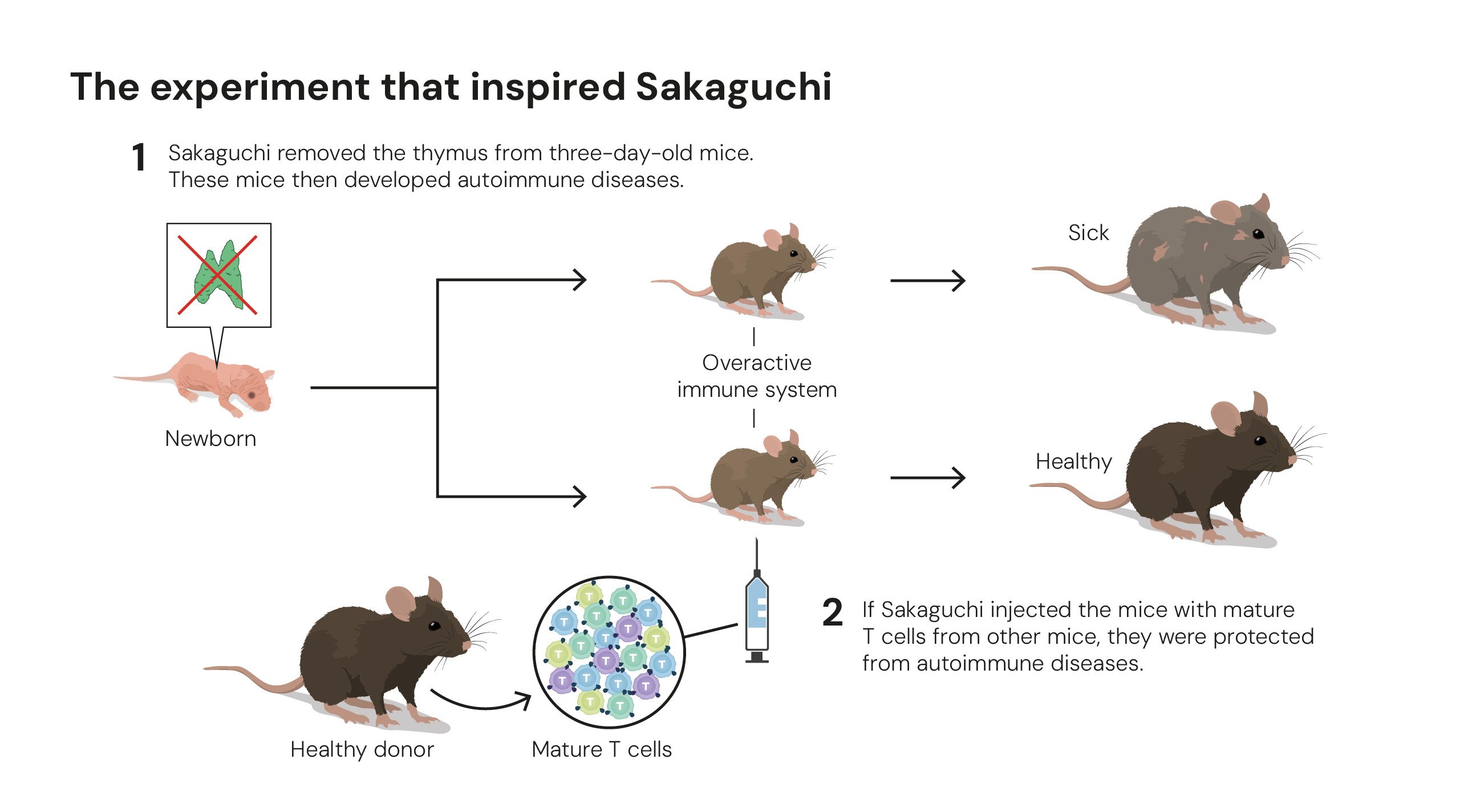
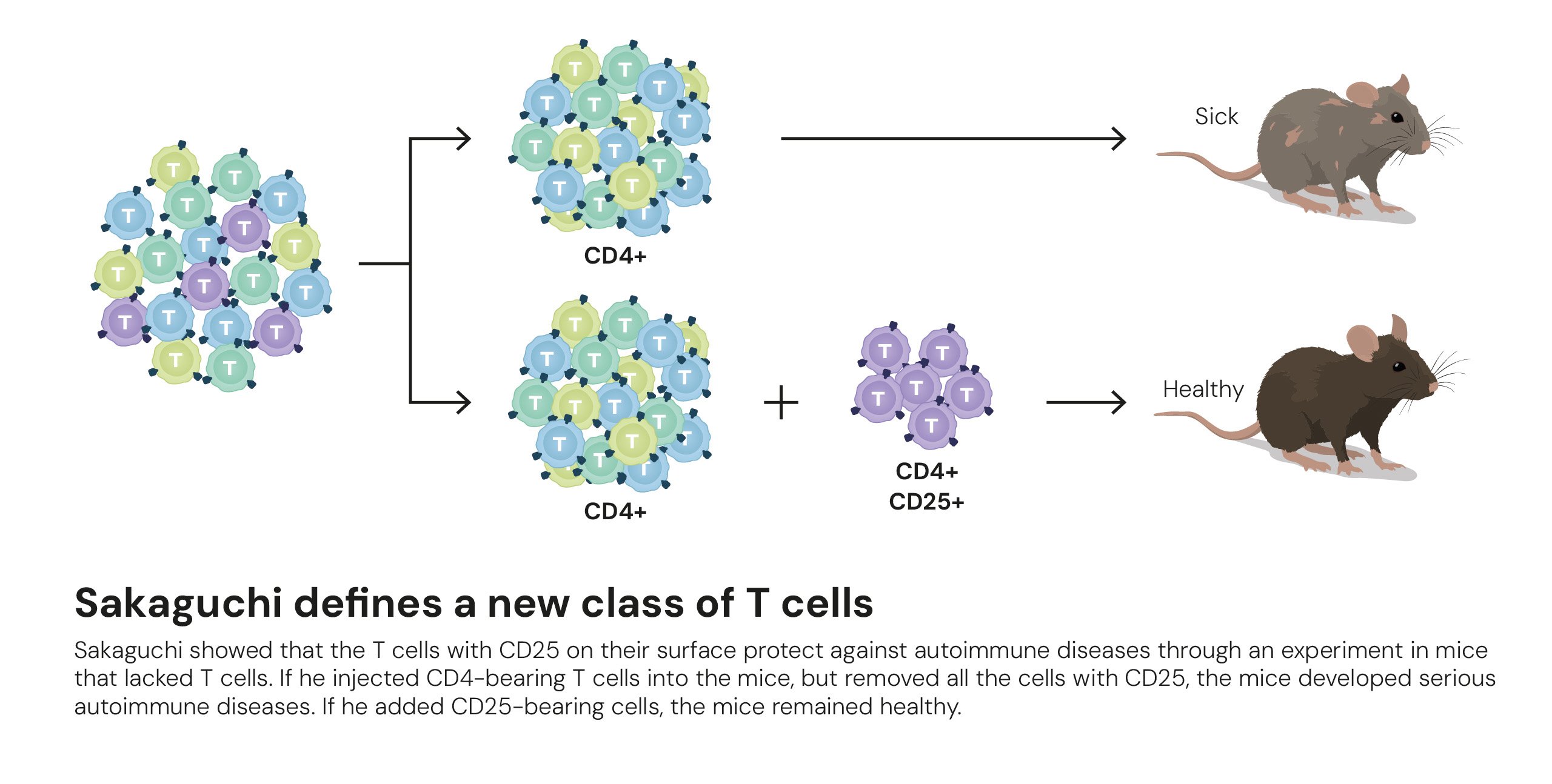
In the 1990s, Shimon Sakaguchi conducted clever experiments with mice. He removed certain immune cells marked with CD25 from healthy mice and transplanted them into mice that had autoimmune disease. Amazingly, the sick mice got better! This proved that these CD25+ cells were the peacekeepers that prevent autoimmune diseases.
The FOXP3 Gene Discovery
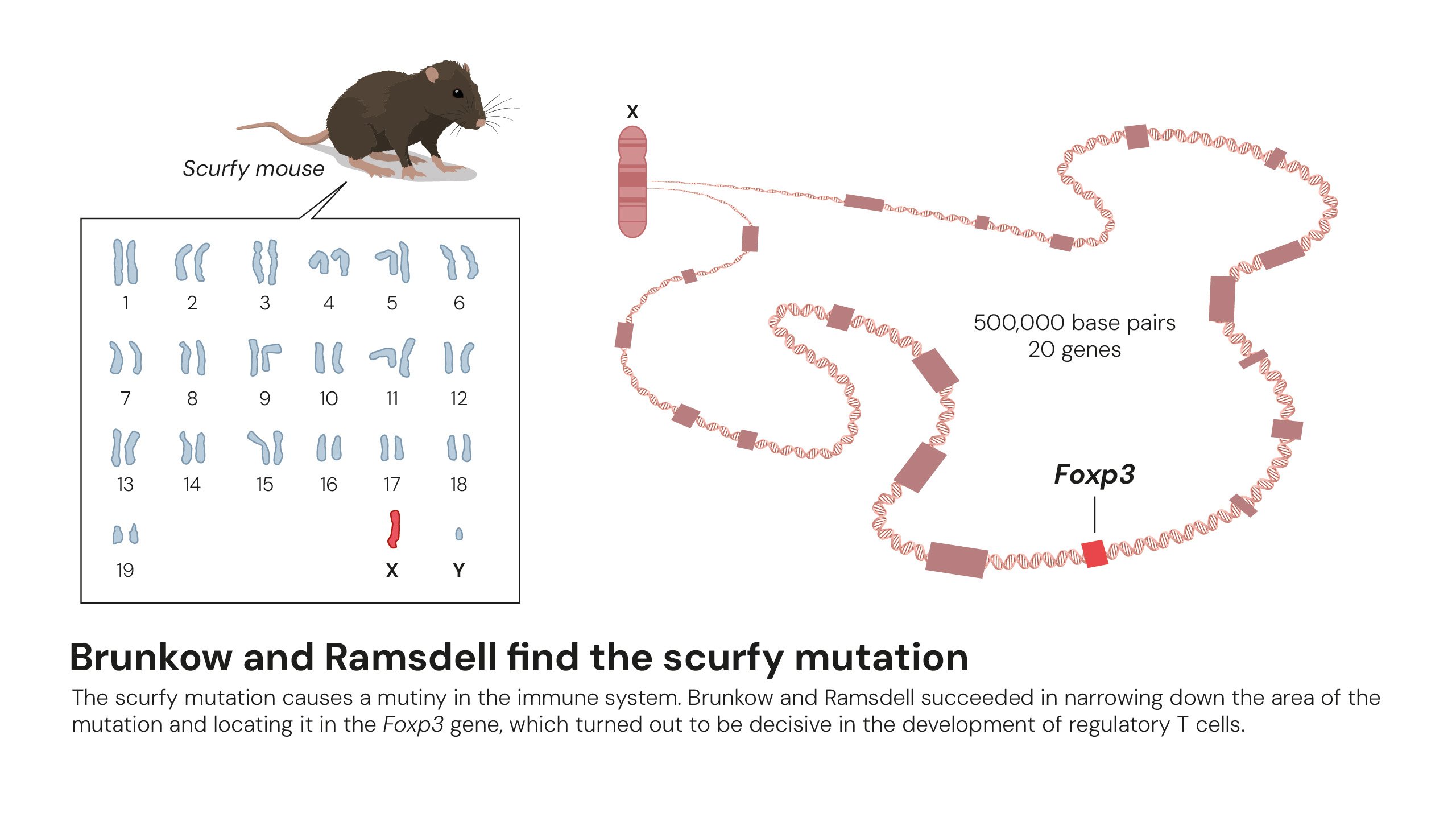
Brunkow and Ramsdell studied mice with a genetic condition called 'scurfy,' where males developed severe autoimmune disease. They discovered that these mice had a broken gene called FOXP3. This gene is like the master switch that turns regular T cells into regulatory T cells - the peacekeepers. Without working FOXP3, there are no peacekeepers, leading to autoimmune chaos.
How It All Works Together
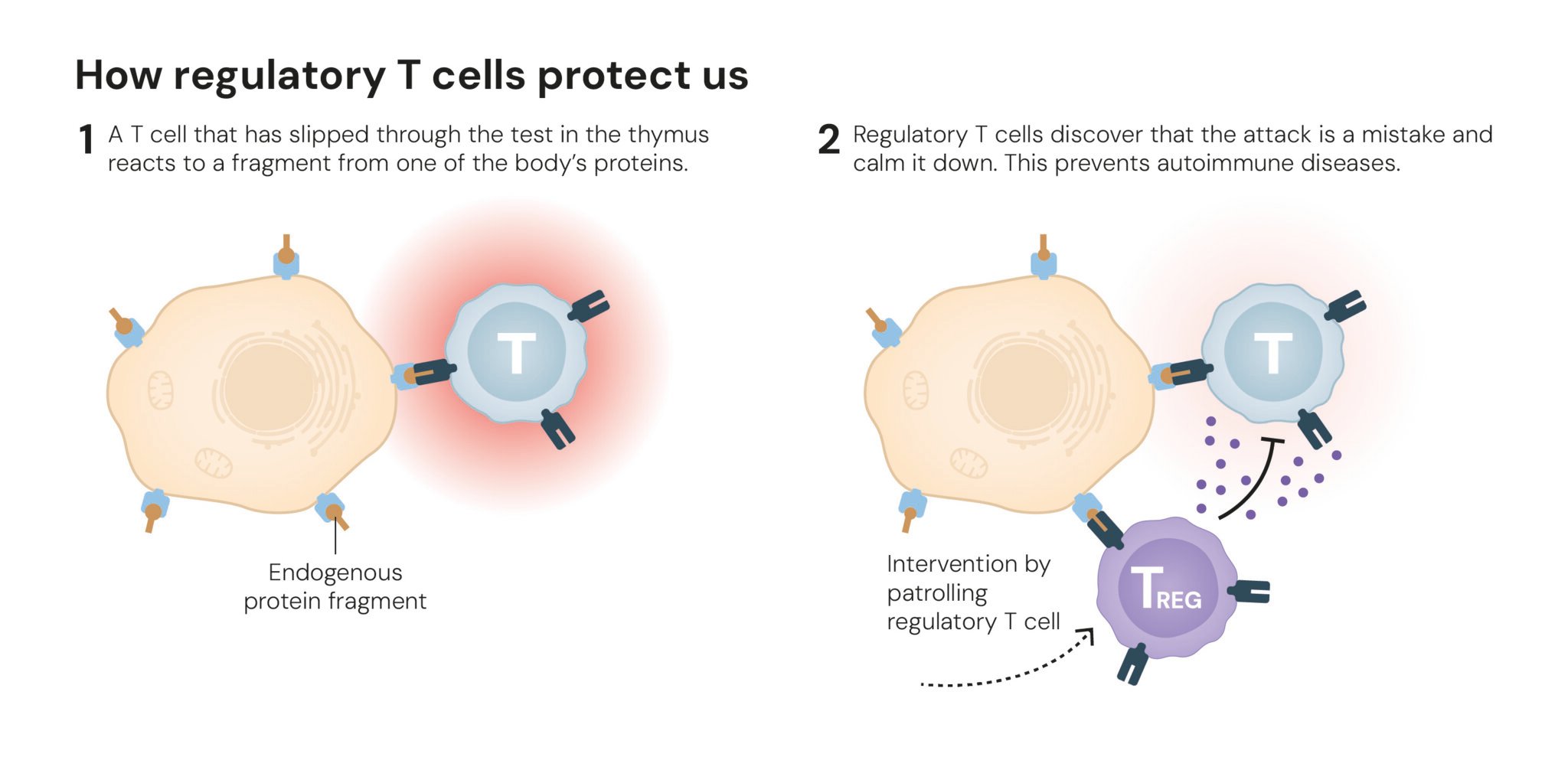
Here's the complete picture: 1) The FOXP3 gene acts as a master switch. 2) When activated, it transforms regular T cells into regulatory T cells (Tregs). 3) These Tregs patrol the body looking for immune cells that might attack healthy tissues. 4) When they find such cells, they stop them, maintaining peripheral immune tolerance and preventing autoimmune diseases.
Medical Applications
This discovery has revolutionized medicine. Doctors now use this knowledge to treat autoimmune diseases by boosting regulatory T cells. In cancer treatment, they sometimes need to reduce Treg activity so the immune system can attack cancer cells more effectively. This research has opened new doors for treating diabetes, arthritis, allergies, and many other diseases.